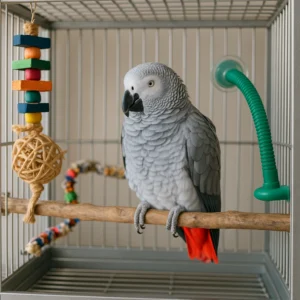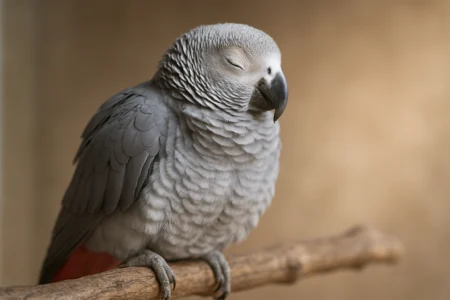

Getting the African Grey parrot cage setup right from the start is one of the most important investments you will make in your bird’s long-term wellbeing. The cage is not simply a place to sleep — it is your parrot’s primary environment for most of the day. Size, materials, layout, location, and hygiene all have a measurable impact on health and behavior.
Choosing the Right Cage Size
African Greys are large, active parrots with a wingspan typically ranging from 18 to 20 inches. The cage must allow full wing extension in all directions without touching the sides, with room to climb and move between perches. The minimum recommended dimensions for a single African Grey are 36 inches wide, 24 inches deep, and 48 inches tall. These are absolute minimums — larger is always better. Width matters more than height for a parrot that moves horizontally across perches.
Bar Spacing and Material
Bar spacing should be between 3/4 inch and 1 inch. Spacing wider than 1 inch creates an entrapment risk. Stainless steel is the gold standard — non-toxic, rust-proof, and resistant to beak damage. Powder-coated steel is a practical alternative if the coating is confirmed non-toxic and free of zinc and lead. Avoid galvanized wire and any cage with visible rust; zinc toxicity from chewed galvanized wire is a documented cause of parrot illness and death.
Perch Placement and Variety
Install a minimum of three perches at varying heights and diameters. The primary perch should have a diameter of approximately 1 to 1.5 inches. Vary the other perches to exercise different muscle groups.
- Natural wood perches (manzanita, java wood) — Irregular diameters excellent for foot health
- Rope perches — Comfortable for sleeping; inspect frequently for fraying
- Mineral perches — Help with beak and nail conditioning; use as a supplement only
Do not place perches directly above food or water dishes.
Enrichment and Toys
- Foraging toys — Hide pellets or treats inside puzzle feeders to replicate natural feeding behavior
- Shreddable toys — Balsa wood, palm fronds, and cork provide appropriate outlets for beak energy
- Foot toys — Small items the parrot can hold and manipulate: wooden blocks, cork pieces, stainless steel rings
Rotate toys every one to two weeks to maintain novelty.
Ideal Cage Placement in Your Home
- Position one side against a wall — Provides security and reduces 360-degree exposure
- Keep the cage in a social area — A living room where the bird can observe household activity is preferable to an isolated room
- Avoid kitchens — Non-stick cookware fumes are acutely toxic to birds; a single overheated pan can kill an African Grey
- Avoid drafts and direct air conditioning vents — African Greys are vulnerable to respiratory illness from cold drafts
Cleaning and Hygiene Routine
- Daily — Replace cage liner, wash food and water dishes, wipe down perches
- Weekly — Scrub all perches and toys with a bird-safe disinfectant or diluted white vinegar; rinse completely and dry before returning to the cage
- Monthly — Deep-clean the entire cage; inspect for damaged bars, loose welds, or chipped coating
Never use bleach, aerosol sprays, scented cleaning products, or essential oils near the cage.
Every African Grey parrot we ship is fully cage-trained before leaving us, meaning your bird is already comfortable entering and exiting calmly and using perches and enrichment items with confidence. Browse our available African Grey parrots and welcome a well-prepared bird into your home.