
Feeding your African Grey parrot feels like an act of love — and it is. But not every food safe for humans is safe for parrots. Some of the most common household foods are outright deadly to African Greys. Understanding which foods to avoid can literally save your bird’s life.
Why Diet Safety Matters
African Greys have a highly sensitive metabolic system. Their bodies process toxins differently than mammals, and substances that cause only mild discomfort in humans can cause organ failure or death in a parrot within hours. Because African Greys are intelligent and curious, they will investigate and sample unfamiliar foods if given access — which means the responsibility for keeping them safe falls entirely on you.
The African Grey Toxic Foods List
- Avocado — Contains persin, concentrated in the skin, pit, and flesh. Even a small amount can cause respiratory distress and cardiac arrest.
- Chocolate — Theobromine and caffeine cause vomiting, diarrhea, seizures, and can be fatal even in small quantities.
- Caffeine — Coffee, tea, and energy drinks cause cardiac arrhythmia and hyperactivity. Never let your parrot sip from your cup.
- Onions and Garlic — Sulfur compounds cause hemolytic anemia, destroying red blood cells. This includes cooked and powdered forms.
- Alcohol — Even trace amounts cause severe liver damage and organ failure.
- Xylitol — Found in sugar-free gum and peanut butter; causes dangerous drops in blood sugar and liver failure.
- Fruit pits and apple seeds — Contain cyanogenic compounds. Always remove pits and seeds before offering fruit.
- Salty foods — Chips, crackers, and processed snacks contain sodium levels that overwhelm a parrot’s kidneys.
- Rhubarb — Contains oxalic acid, toxic to birds and damaging to kidneys.
Foods That Are Safe in Moderation
- Citrus fruits — Not toxic, but high acidity can disrupt digestive balance. Offer occasionally and in small pieces.
- Dairy products — Parrots are lactose intolerant; avoid as a regular part of the diet.
- High-sugar fruits — Grapes and mangoes are fine as treats but should not make up the bulk of the diet.
- Seeds — Not toxic but high in fat. Use as a small supplement, not a staple.
Building a Healthy Daily Diet
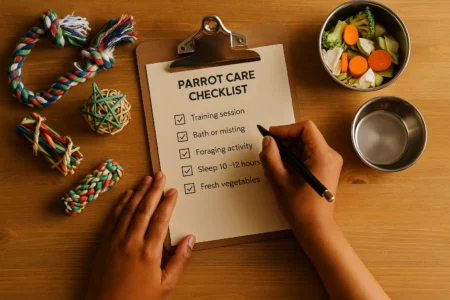
A well-balanced African Grey diet consists of approximately 60 to 70 percent high-quality pellets, supplemented with fresh vegetables, limited fruits, cooked whole grains, and legumes. Excellent choices include dark leafy greens such as kale, spinach, and Swiss chard, along with bell peppers, carrots, broccoli, and sweet potato. Fresh water should always be available and changed daily.
Quick Reference Table
| Food | Status | Reason |
|---|---|---|
| Avocado | Never Feed | Persin causes cardiac and respiratory failure |
| Chocolate | Never Feed | Theobromine causes seizures and death |
| Caffeine | Never Feed | Cardiac arrhythmia; fatal in small doses |
| Onion / Garlic | Never Feed | Causes hemolytic anemia |
| Alcohol | Never Feed | Liver failure; fatal in trace amounts |
| Xylitol | Never Feed | Blood sugar crash and liver failure |
| Fruit pits / seeds | Never Feed | Cyanogenic compounds |
| Salty snacks | Never Feed | Kidney failure from sodium overload |
| Citrus fruits | Moderation | High acidity; limit portions |
| Seeds | Moderation | High fat; supplement only |
| Dark leafy greens | Recommended | Rich in vitamins A, K, and calcium |
| High-quality pellets | Core Diet | Nutritionally complete; majority of diet |
Every African Grey parrot we raise is weaned onto a balanced diet of high-quality pellets and a rotating selection of fresh vegetables and fruits before shipping. Your bird arrives knowing how to eat well. Browse our available African Grey parrots and give your family the gift of a healthy, thriving bird.