African Grey parrot care extends far beyond providing a cage, a food bowl, and occasional conversation. These birds — among the most cognitively sophisticated animals ever studied — carry the intellectual and emotional complexity of a young child. They deserve guardians who take that seriously. The following Bill of Rights is a framework for every person who shares their life with an African Grey, whether they are a first-time owner or a seasoned breeder.
Right 1: Informed Guardianship
An African Grey parrot is not a decorative accessory. With a cognitive capacity comparable to a five-year-old child and a lifespan of 40 to 60 years in captivity, these birds require guardians who have done serious research before making a commitment. Understanding species-specific nutritional needs, behavioral signals, common health risks, and the sheer time demands of parrot ownership is not optional — it is the first obligation of care.
Right 2: Space and Movement
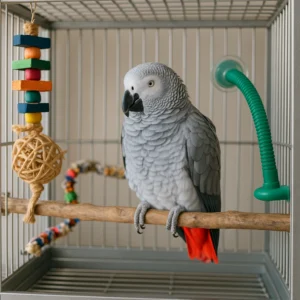
African Greys are athletic birds with wingspans reaching up to 24 inches. A responsible cage provides a minimum floor space of 36 by 24 inches and a height of at least 48 inches — enough to allow full wing extension, climbing, and movement between perches at different heights. Beyond the cage, daily out-of-cage time in a safe, enriched space is essential. Parrots confined without adequate movement develop frustration, stereotypic behaviors, and a significantly increased risk of feather-destructive disorders.
Right 3: Nutritious Diet
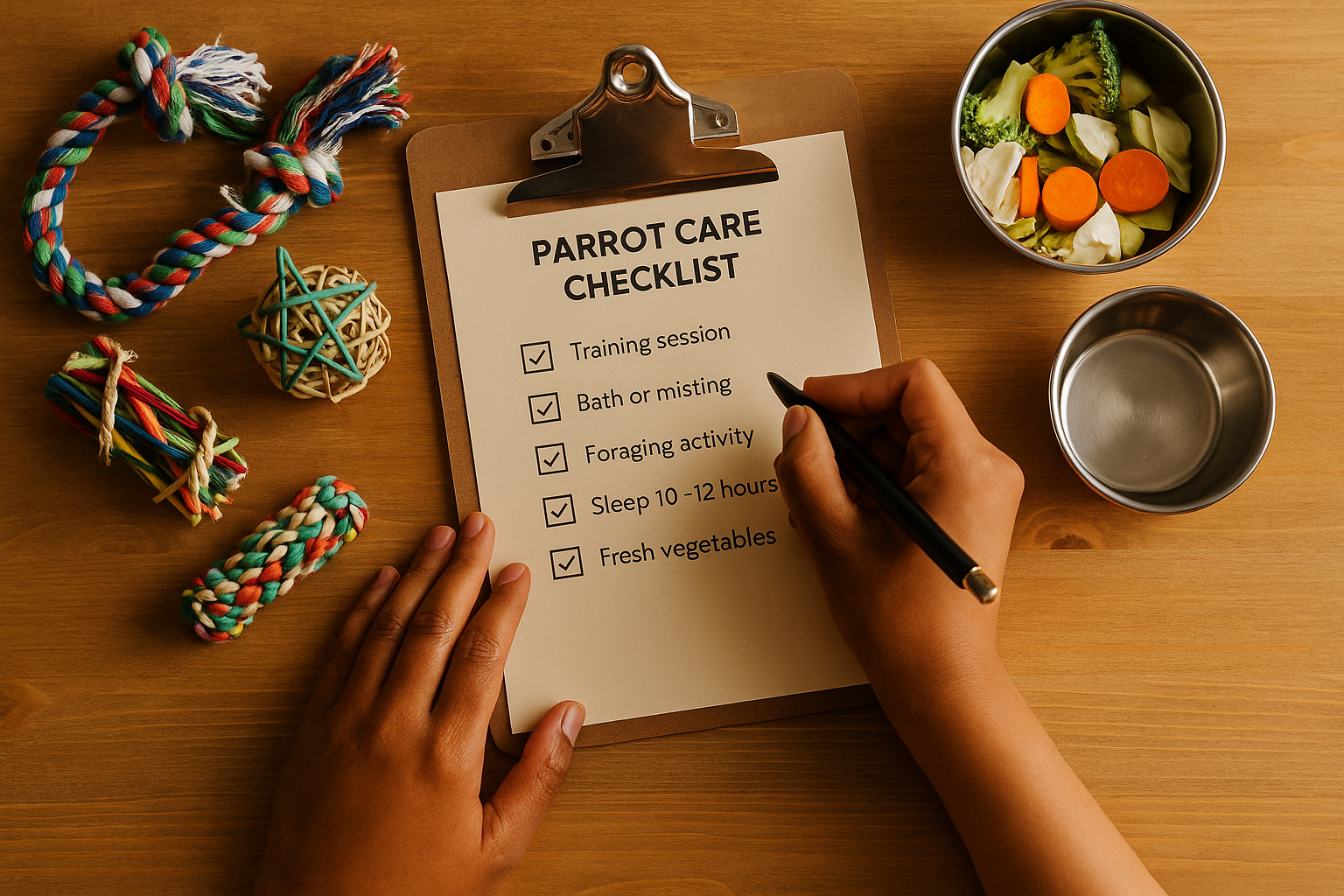
A seed-only diet is one of the most common and entirely preventable causes of illness in African Greys. Proper care requires a varied diet built around high-quality formulated pellets — approximately 60 to 70 percent of daily intake — supplemented with fresh vegetables, dark leafy greens, limited fresh fruit, and occasional healthy table foods. Because African Greys are uniquely susceptible to hypocalcemia, calcium-rich foods such as kale, broccoli, and almonds deserve a regular place in their diet.
Right 4: Social Life and Predictability
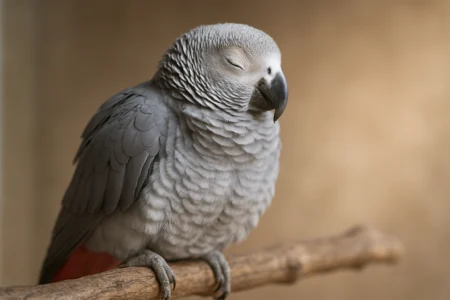
In the wild, African Greys live within large, socially stable flocks. In a home environment, their human family becomes that flock — and the bond carries real obligations. These birds need daily, meaningful interaction, not simply passive presence in a room. Equally important is routine. African Greys are acutely sensitive to disruption: changes in feeding schedules, household composition, or caregiver mood can all register as sources of chronic stress.
Right 5: Cleanliness and Comfort
A clean environment is a health imperative, not simply an aesthetic preference. Cages should be spot-cleaned daily and fully disinfected at least once a week. Food and water dishes must be washed every day — bacterial contamination in standing water or spoiled food is a direct path to illness. Regular bathing through gentle misting or a shallow bathing dish supports healthy feather condition and natural preening behavior.
Right 6: Competent Healthcare
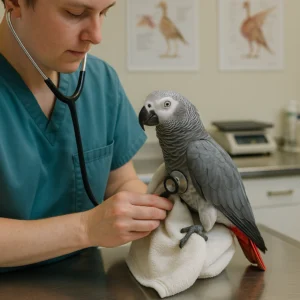
Every African Grey deserves access to an experienced avian veterinarian — not a general small-animal practice, but a vet with documented expertise in exotic and avian species. Annual wellness examinations are the minimum standard of care, allowing early detection of conditions disproportionately common in this species: aspergillosis, psittacine beak and feather disease, hypocalcemia, and polyomavirus. Because parrots are prey animals that instinctively conceal illness, guardians must learn to recognize subtle behavioral shifts and treat them as clinical signals warranting prompt attention.
Right 7: Fear-Free Teaching
African Greys are intellectually capable of learning through positive reinforcement, and emotionally sensitive enough to be seriously harmed by coercive methods. Fear-free teaching means using reward-based training exclusively: high-value food treats, calm verbal praise, and the simple power of choice. A parrot trained through fear may comply with commands, but the trust that makes the relationship genuinely enriching will be difficult or impossible to rebuild.
At africangreyparrot.org, we hold these rights as the foundation of everything we do. Every bird we place is fully hand-tamed, socialized from the earliest weeks of life, and comes with a current health certificate issued by a licensed avian veterinarian. If you are ready to welcome one of these extraordinary companions into a prepared home, browse our African Grey parrots for sale and find your perfect match.