
African Greys are widely regarded as the most emotionally complex parrots in the world. Their intelligence rivals that of a five-year-old child, and their emotional sensitivity matches it. Understanding African Grey behavior is nuanced and deeply communicative — once you know how to read it, your relationship with your bird transforms entirely.
Why African Grey Behavior Is Unique
Unlike many parrot species, African Greys form extraordinarily deep bonds with their owners. They notice changes in your tone of voice, your mood, your daily routine, and even the arrangement of furniture in their room. A well-bonded Grey is an attentive, communicative, and deeply affectionate companion — but their emotional depth means they are prone to stress and behavioral issues when their environment or routine is disrupted.
Reading Body Language
- Eye pinning — Rapid contraction and dilation of the pupils. Combined with relaxed posture, it indicates excitement. Combined with a puffed body or fanned tail, it signals agitation — do not attempt handling in this state.
- Feathers slightly ruffled and body relaxed — The posture of a content, comfortable parrot who trusts you.
- Feathers sleek and tightly held — Alertness or fear. Speak calmly, move slowly, and give the bird space.
- Tail fanning — Almost always a warning. Paired with leaning forward, it signals that a bite may be coming.
- Head bowing with crown feathers raised — An invitation to be scratched. A clear signal of trust and affection.
- Regurgitation directed at you — The deepest form of affection a parrot can offer; how they feed bonded partners in the wild.
Common Vocalizations and What They Mean
- Contact calls — Short, repeated calls when your bird cannot see you. Respond briefly and calmly to reassure your Grey that you are nearby.
- Growling or low clicking — A clear warning. Your bird is uncomfortable and does not want to be approached. Respect it.
- Whistling and singing — Signs of a happy, relaxed bird that feels safe and stimulated.
- Mimicked phrases used in context — A Grey using learned phrases accurately is demonstrating genuine comprehension, not just mimicry.
- Persistent screaming — Typically signals boredom, loneliness, or distress. Identify the trigger rather than ignoring or immediately rewarding it.
Preventing and Addressing Biting
Biting is a communication failure — almost always one that could have been avoided. African Greys rarely bite without warning. Learning to recognize and respect the body language signals described above is the single most effective way to prevent biting. When biting does occur, calmly set the bird down and give both of you a moment to reset. Never punish physically — harsh responses damage trust without correcting the underlying cause.
Building a Strong Bond
- Establish a predictable routine — Consistent feeding times, play times, and rest periods reduce anxiety and build security.
- Spend quality time daily — Brief, calm daily interactions are more valuable than long, infrequent ones.
- Use positive reinforcement — Reward desired behaviors with praise, gentle touch, or a favorite treat.
- Respect refusal signals — A bird that learns its communication is respected becomes a far more willing and trusting partner over time.
- Provide mental enrichment — Foraging toys, puzzle feeders, and novel objects keep a Grey’s mind engaged and reduce boredom-driven behavioral problems.
When Behavior Signals a Problem
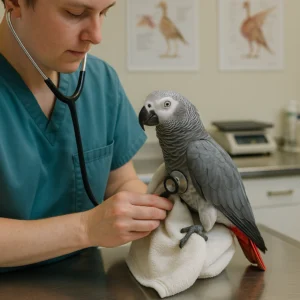
Feather picking or plucking is among the most concerning behaviors in African Greys. A bird that pulls out its own feathers may be experiencing nutritional deficiencies, illness, or severe psychological distress. A veterinary examination is always the correct first step — do not assume it is purely behavioral until a physical cause has been ruled out. Other warning signs include sudden personality changes, persistent loss of appetite, and extended periods of silence in a normally vocal bird.
Every African Grey parrot we raise is hand-tamed from an early age and socialized daily throughout the weaning process. Our birds arrive in their new homes already comfortable with human interaction — giving you the best possible foundation for a lifelong bond. Explore our available African Grey parrots and take the first step toward welcoming a well-adjusted, socialized bird into your family.