African Grey feather plucking — formally classified as feather-destructive behavior — is one of the most distressing conditions a parrot guardian encounters. It ranges from mild over-preening to severe self-mutilation, and its causes are equally variable: a bird that plucks may be medically ill, chronically stressed, profoundly bored, or dealing with some combination of all three. Effective intervention depends entirely on accurate diagnosis.
What Is Feather Plucking?
Feather plucking occurs when a parrot actively removes its own feathers — either pulling them out by the root or chewing the shaft until it breaks. It is distinct from normal molting. A plucking bird presents with patchy, ragged, or entirely absent feathers in areas accessible to the beak: most commonly the chest, inner wings, flanks, and abdomen. The nape and top of the head — which the bird cannot reach — typically remain intact, distinguishing self-directed plucking from external causes such as cage-mate aggression. In severe cases, repeated trauma to the feather follicle can cause permanent damage, preventing future regrowth.
Medical Causes to Rule Out First
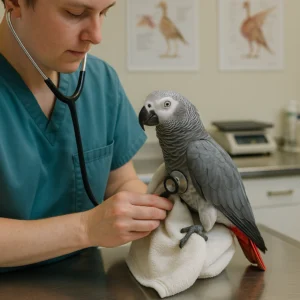
A thorough veterinary examination must precede any behavioral intervention. African Greys are susceptible to several physical conditions that directly cause or strongly contribute to feather-destructive behavior:
- Psittacine Beak and Feather Disease (PBFD) — a circovirus that damages feather follicles and compromises immune function
- Bacterial and fungal infections — skin irritation from Staphylococcus, Candida overgrowth, or Aspergillus can drive self-directed preening
- Hypocalcemia — chronically low blood calcium, with unusual prevalence in African Greys, is associated with behaviors including feather destruction
- Allergies — dietary intolerances, tobacco smoke, non-stick cookware fumes, and aerosol sprays can all produce skin irritation
- Hypothyroidism and endocrine imbalances — hormonal disruption affects feather cycling and can precipitate destructive preening
A complete diagnostic workup — including full blood count, biochemistry panel, feather cultures, and PBFD testing — should be completed before any behavioral label is applied.
Behavioral and Environmental Triggers
Once medical causes have been ruled out or treated, the investigation moves to the bird’s psychological and social environment:
- Chronic understimulation — insufficient foraging opportunities and long periods of inactivity are among the most common precursors to feather-destructive behavior
- Social deprivation — too little interaction with bonded companions produces measurable psychological distress in a flock species
- Separation anxiety — most frequently observed in birds with a single, intensely bonded caregiver who is absent for extended periods
- Unpredictable environments — African Greys are particularly sensitive to schedule disruption, loud household dynamics, and perceived predators
- Hormonal fluctuation — breeding-season hormonal surges intensify many self-directed behaviors
How to Stop African Grey Feather Plucking
- Complete veterinary clearance — Begin with a full diagnostic workup. Many birds stop plucking entirely once a medical cause is identified and treated.
- Environmental audit — Evaluate cage size and placement, noise and light exposure, daily routine consistency, and quality of social interaction.
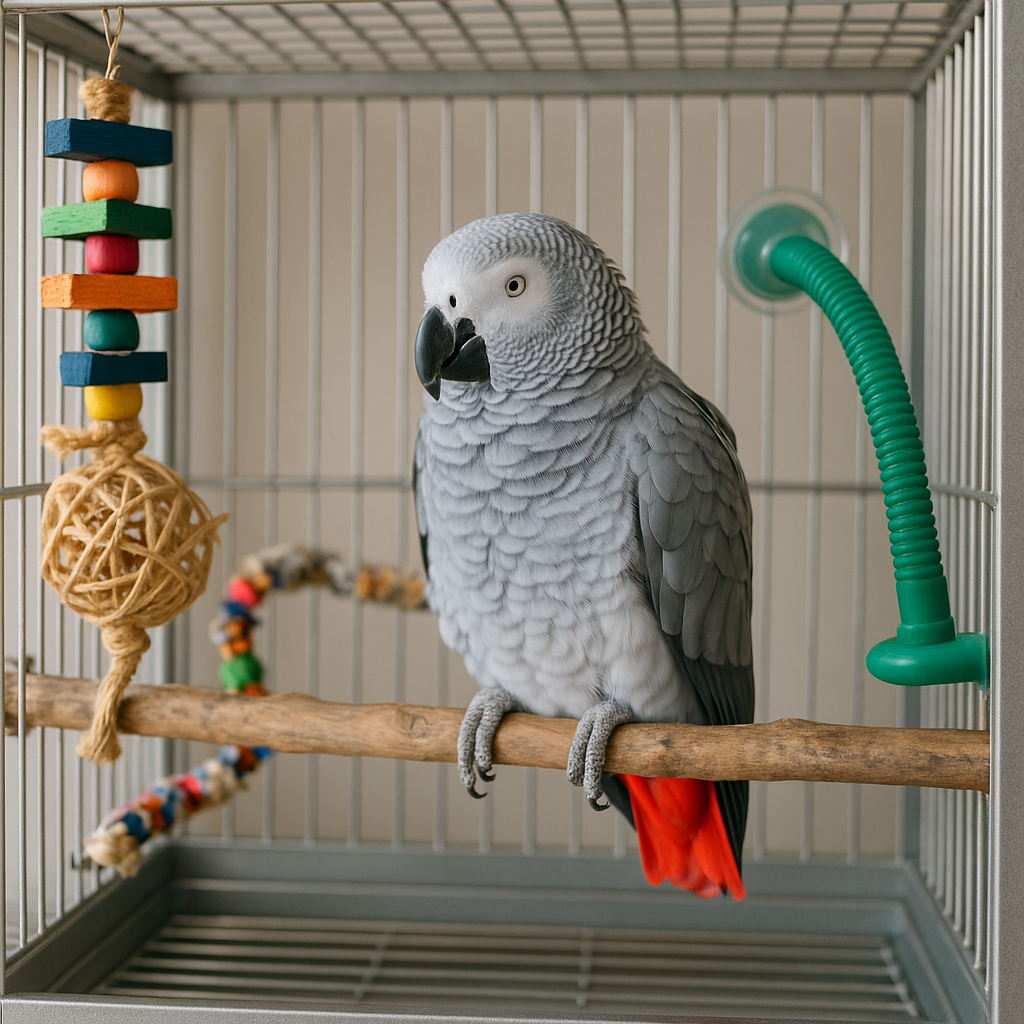
- Enrichment overhaul — Introduce foraging feeders, rotate toys regularly, and provide abundant chewable materials to redirect beak-directed energy.
- Structured social contact — Establish consistent daily interaction at predictable times. The goal is a secure, predictable social attachment.
- Behavioral consultation — A certified parrot behavior consultant can design a positive-reinforcement modification plan tailored to the individual bird.
- Pharmacological support — In chronic or self-injurious cases, avian veterinarians may prescribe anxiolytic agents as a short-term bridge alongside behavioral modification.
Supporting Feather Regrowth
Once feather plucking has been brought under control, supporting physical recovery becomes the priority. Ensure adequate dietary protein, prioritize vitamins A, D3, and E along with calcium and zinc, provide regular bathing opportunities, and install full-spectrum lighting. Guardians should expect recovery to be slow — a full molt cycle takes several months, and follicle damage from chronic plucking may result in permanently bare patches.
African Grey feather plucking is substantially less common in birds raised in calm, socially enriched environments from the earliest stages of life. Every parrot we place at africangreyparrot.org is hand-raised from hatching, acclimated to human handling and household environments from the start, and socialized to reduce the anxiety that frequently underlies destructive behaviors. Browse our available African Grey parrots and begin with a bird already prepared to thrive.