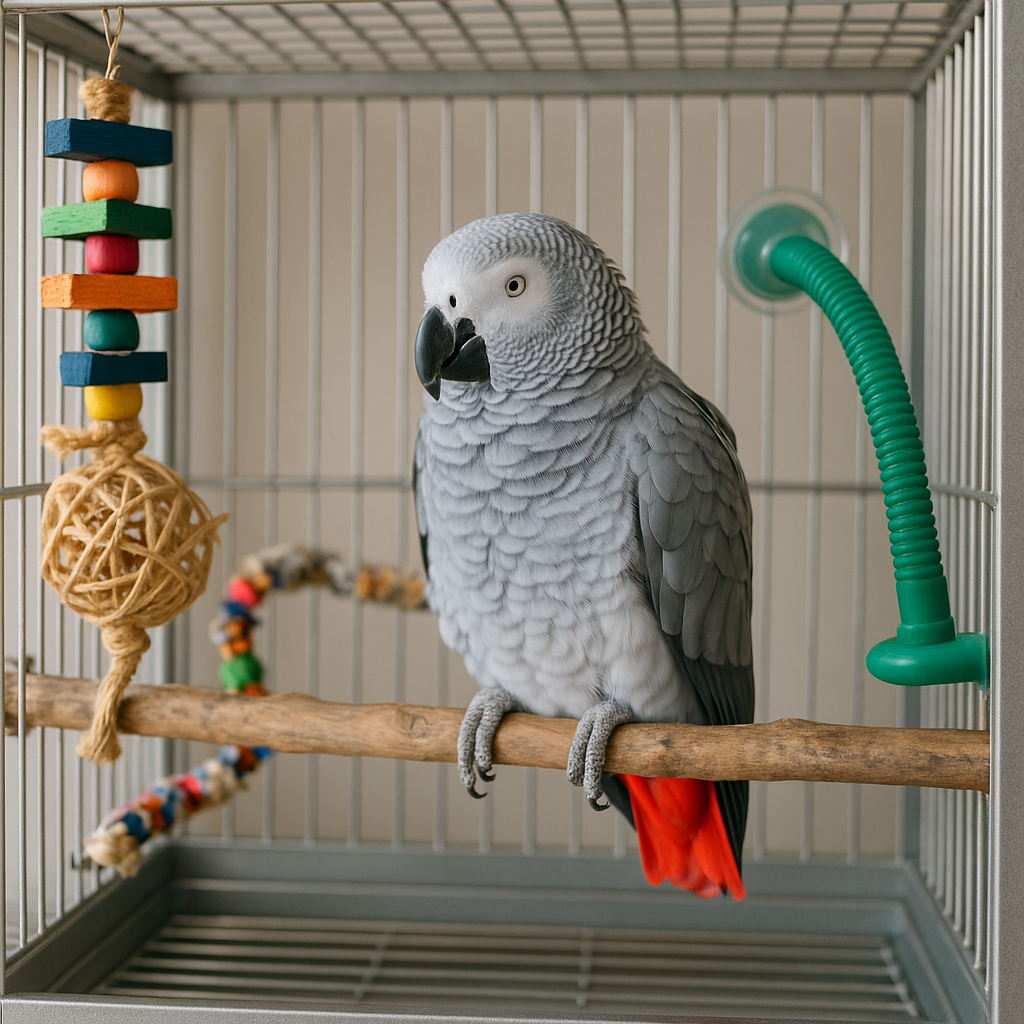
African Grey Feather Plucking
A compassionate, evidence-informed guide to identify causes, stop escalation, and support healthy regrowth for African Grey parrots that pluck.
Introduction
Reader problem: You lift the cage cover and find feathers on the grate. Your heart sinks. African Grey Feather Plucking feels scary, but it is solvable when you work methodically. This guide shows how to triage medical causes first, rebuild daily routines, and reinforce calm behaviors so your Grey feels safe in its own feathers again.
African Grey Feather Plucking basics
Feather destructive behavior is a symptom, not a diagnosis. It can be medical, environmental, or behavioral. Congo African Greys may present more often than Timneh Greys in owner reports, although data quality varies and newer breeding histories may shift that picture over time. [Add Source]
Think layers: body comfort, environment, and learning history. Your plan should address all three layers in parallel while you track objective changes with photos and simple scoring.
Rule out medical drivers first
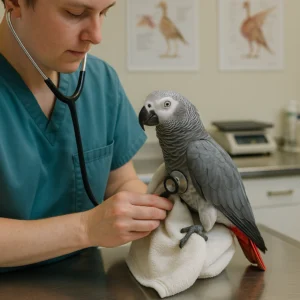
Book an avian veterinarian exam before changing behavior plans. Ask for a targeted workup to screen common contributors.
- Nutritional status review with emphasis on vitamin A, calcium, and fatty acids. Transition seed-heavy diets toward balanced pellets plus fresh produce.
- Skin and feather cytology or culture to evaluate bacterial or fungal issues.
- Parasite check for internal and external actors.
- Heavy metal screen for zinc and lead if exposure is plausible.
- Endocrine or pain assessment when history suggests arthritis or organ disease.
Environmental comfort checklist
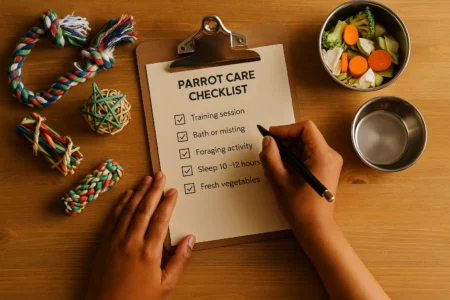
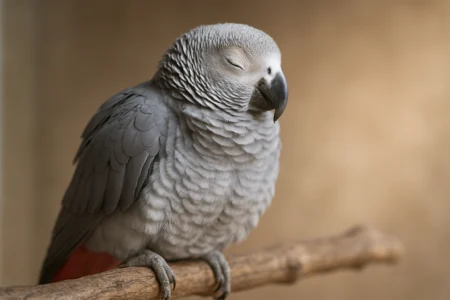
- Stable sleep: 10 to 12 hours dark and quiet. Consider a sleep cage if the living room is active at night.
- Humidity: aim for comfortable indoor humidity; add showers or misting 3 to 5 times per week depending on climate.
- Air quality: avoid aerosols, candles, strong fragrances, and smoke.
- Cage hygiene: spacious, clean, and enriched with chewable textures. Rotate toy locations weekly.
- Light cues: predictable day timing; provide bright, indirect light with shaded retreat zones.
Side-by-Side Comparison
| Feature | Feather Plucking | Normal Molt or Barbering |
|---|---|---|
| Feather loss pattern | Patchy areas, often chest or legs | Symmetric, seasonal replacement |
| Shaft appearance | Chewed or broken shafts; down exposed | Cleanly shed feathers with intact quills |
| Skin condition | May be pink or irritated | Usually normal skin tone |
| Behavior context | Occurs during stress or under-stimulation | Occurs during routine preening and molt |
Behavior plan to stop escalation
Design short, predictable routines that compete with plucking. Replace idle time with easy wins and foraging.
- Calm capture: Catch any 2 to 5 second pause without plucking and mark with a bridge word then deliver a tiny treat.
- Target training: Teach beak-to-target touches so you can cue movement and interaction without hands when arousal is high.
- Station cue: Reinforce holding on a comfy perch near you. Stationing gives the bird agency and reduces nervous grooming.
- Foraging minutes: Build to 20 to 40 minutes daily using paper cups, palm balls, or puzzle trays. Log minutes to see behavior drop as foraging rises. [Add Source]
- Non-reaction rule: Do not scold or rush to cover the cage when plucking happens. Quietly change the activity or location instead.
Mini case study
Bird: 8 year old Congo African Grey, indoor urban apartment.
Findings: Sleep averaged 7 hours, showers once weekly, free access to hands during busy evenings. Chest barbering present.
Plan: Added sleep cage in quiet room, increased showers to 4 per week, introduced target and station cues, 30 daily foraging minutes, owner switched to neutral responses plus calm capture reinforcement.
Outcome: After 6 weeks, damage stabilized and new pinfeathers visible on chest. Owner reported fewer idle periods and more play.
Myths, Mistakes, or Gotchas
- Myth: Plucking is attention-seeking only. Reality: It can be medical, environmental, or learned. Rule out health issues first.
- Mistake: Drastic enrichment changes overnight. Fix: Keep routine predictable and rotate one variable at a time.
- Myth: Wearing a collar always fixes the issue. Reality: Collars can protect skin but do not teach alternatives. Use only with vet guidance.
- Gotcha: Reinforcing with big treats rarely. Fix: Use small, frequent reinforcers so calm behavior competes strongly with plucking.
FAQs
- Q: How much sleep does an African Grey need during recovery?
- A: Target 10 to 12 hours of quiet, dark rest nightly. A separate sleep cage helps if the main room stays active.
- Q: Should I cover my bird or scold when I see plucking?
- A: No. Reacting can add stress. Instead, change the activity, cue a target touch, or move to a window perch, then reinforce calm.
- Q: How often should I bathe my Grey?
- A: Many birds benefit from misting or showers 3 to 5 times weekly, adjusted for climate and individual preference.
- Q: Will diet changes help?
- A: Yes. Transition away from seed-heavy diets toward balanced pellets plus fresh vegetables and dark leafy greens. Consult an avian vet for a tailored plan.
- Q: When will feathers grow back?
- A: Timeline varies. Aim for stabilization within weeks, then gradual regrowth across molts if the underlying causes are addressed.
Conclusion & Next Steps
Plucking improves when you address comfort, predictability, and skills at the same time. Start today with a vet check, a sleep schedule, and three quick training reps. Track progress weekly so small wins become momentum.